Roland Saxton 1896 – 1917
Family History:
Roland was born on the 8th March 1896 at Chancery Lane, Gawthorpe, the son of George Henry and Hannah (Nee Robinson). He was baptised at St.Peter’s, Earlsheaton on 3rd May 1896 when his father’s occupation was given as millhand.
In 1901 Roland is at Chancery Lane , Gawthorpe with his mother and younger sister Gertrude Verena (8th March 1899) whilst his father is a boarder living in the Mill Hill area of Leeds . The family must have moved to Leeds shortly after this because Percy (1902) and Claude (1904) were born in Leeds .The family then moved to Batley before the birth of Austin in 1907.
In 1911 the family are living in a four roomed house at 44,Bradford Road West, Batley. One child had died between 1894 and 1911
Roland attended Carlinghow Council Schools and St. John’s Church and Sunday School , also beig in the Church Lads’ Brigade and a member of the Sunday School Football Club. He was a keen footballer and had won a medal after joining up in the regimental football team.
Roland was working as a cloth finisher for a woollen manufacturer.
Before joining up Roland worked for two years as a rag grinder for Messrs Frank Townend and Sons , Spring Mills, Carlinghow and previous to this for messrs Briggs and Sons , Dock Ing Mills, Carlinghow.
Service Details:
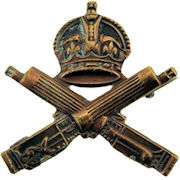
Roland Saxton’s army service record has not survived, but it is known that he enlisted in Batley in November 1915 and joined the King’s Royal Rifle Corps, with regimental service number R/16863, going to France in May 1916 before transferring to the Machine Gun Corps, MGC, (service number 29364). He was sent to Salonika at Christmas 1916 and transferred to Egypt around May 1917 Gunner R. Saxton was serving with the 160th Company M.G.C. when he was killed in action on the 7th November 1917. He was 21 years of age and was posthumously awarded the British and Victory medals,
The 160th Machine Gun Company was formed in the 53rd (Welsh) Division on the 11th May 1916. Roland Saxton was killed during the Battle of Tell Khuweilfe between the 3rd and 7th November 1917, a prelude to the capture of Gaza and Jerusalem from the defending Turkish Ottoman Empire. Tel el Khuweilfe, was a Turkish strongpoint with a good water supply, ten miles north of Beersheba. The British then had to tackle the enemy who still held Khuweilfe. This was rough, dry country and the summer lingered on with intense heat and a three-day khamsin.
There was no water to be had beyond Beersheba and the infantrymen, Yeomanry and Light Horse had to march and fight on one water bottle in 36 hours, and the horses on nothing – they would not eat past the early stages of thirst – until they could be brought out of action and back to Beersheba, twelve to fifteen miles away. Tel el Khuweilfe commanded the country to both west and east, and would therefore menace the British infantry and mounted troops when they struck at the Hareira and Nejile redoubts in the rolling-up process. On the other hand, its capture by the British would leave the Turkish left flank in the air.
The 158th Brigade of the 53rd Division set off before dawn on the 6th November to attack Tel el Khuweilfe, unfortunately short of one battalion that had not arrived in time. During the attack, which took place in a very heavy mist, British artillery accidentally shelled the closing British forces and much confusion ensued with many casualties from Turkish machine gun fire from the hill top. Shortly before dawn on the 7th November, the machine-gunners were withdrawn, but the fire fights resumed with daylight, Turkish close-range sniping especially taking a severe toll. The action was deadlocked, with the Camels and 53rd units unable to move, and the Turks held at bay. The Turks that day fought with exceptional resolution and savagery, and British and Australian wounded and stretcher-bearers were repeatedly fired upon.
At 3 p.m., accurate artillery fire was brought to the support of the 53rd, enabling a general advance to be mounted towards evening. All troops had been marching and fighting for over 36 hours, but summoned their last reserves to attack determinedly. The Camels rushed the slopes of Khuweilfe with bayonets and hand grenades, and after brief resistance the Turks fled the grim mound. The 53rd went forward until darkness checked them. The night was tense but quiet, and in the morning it was found that the Turks, whose front had been comprehensively breached by Chetwode at Kauwukah, had abandoned all the Khuweilfe fortifications.
Khuweilfe was a piecemeal, reactive action. It seemed small scale, undeserving of proper plans and systematic reduction, yet the pinprick became a consuming canker that wore down and mauled three divisions for six days. In the final action, the 53rd Division suffered the heaviest pro rata casualties, including Private Roland Saxton.
The news of his death was received in a letter from a Lieutenant:
”Your son died bravely in action on November 7th. He was killed by a sniper’s bullet through the head and felt no pain. He had been at his gun since nine in the morning until half past two in the afternoon and he played a great part in smashing a Turkish counter attack. Had he lived he would have won the Military Medal. During the whole time we have been fighting I do not remember to have seen him otherwise than laughing, in fact he died laughing, and what our men have to endure is no matter for cheerfulness. We all mourn him, and I tell you very sincerely he is the fellow whose loss we shall feel the more than any other in our section. He has always contributed to the cheerfulness and has kept other men’s spirits up when things weren’t going too well. Brave happy lad—that is our memory of him and we want it to be yours. I cannot ask you not to be sad because we who loved him as a pal grieve for him and we realise how terrible must be your loss, but I do ask you to be proud that he has been your sacrifice for the great cause for which we are fighting. One tries to say honesty “Who dies if England lives” and that is the creed I will pass on to you. We were unable to bury him at the time because we had to hurry on in the advance but you can rest assured he has been buried decently somewhere north west of Beersheba. Both the men and myself ask you to accept our deepest sympathy”.
The following year the following obituary appeared in the Batley News:
SAXTON In ever loving memory of our dear son and brother, Private Roland Saxton, M.G.C. killed in action in Palestine November 7th1917 aged 21.
One of the bravest, one of the best,
Doing his duty was called to rest,
“Thy will be done” t ’is hard to say,
When one we  loved  was called away.
Some day we hope to meet him,
Some day we know not when,---
To clasp his hand in the better land
Never to part again.
From his loving father, mother, sister and brothers, 18 Providence Street, Batley.
Roland was awarded the British War Medal and the Victory Medal.
Roland is remembered with Honour at St John the Evangelist, Carlinghow, Batley and on Ossett War Memorial.
Researched by
Members of Batley History Group